EDTA, garlic & malic acid for circulation: how the Cardio Flow actives work
EDTA, garlic and malic acid are three of the actives in Cardio Flow, and each has its own story. This plain-language guide explains what each ingredient is, how it is traditionally used in circulation and cardiovascular-wellness formulas, the dosing context on the label, and exactly what to look for when you compare products — without any claims to diagnose, treat, cure or prevent disease.
The three headline actives, in one place.
- EDTA
- A chelating compound used for decades in oral cardiovascular-wellness formulas; Cardio Flow supplies 500 mg of calcium disodium EDTA per serving.
- Garlic
- A culinary allium with a centuries-long tradition in circulatory wellness; 200 mg per serving, standardised for alliin.
- Malic acid
- A naturally occurring fruit acid in the body’s energy cycle; 500 mg per serving as a supporting ingredient.
- Also inside
- Vitamin B3 (niacin) 20 mg NE and parsley leaf 50 mg round out the blend.
- Important
- These are dietary-supplement ingredients, not treatments; people on blood thinners or with kidney issues should ask a doctor first.
Reading a supplement label can feel like decoding a foreign language. The goal of this guide is to make the Cardio Flow panel legible: what each ingredient is, why it is there, and how much you are getting. For the broader picture of daily habits, see how to support healthy circulation naturally; for the plate, see the best foods for heart health.
What is EDTA, and why is it in a cardio formula?
EDTA stands for ethylenediaminetetraacetic acid. Chemically, it is a chelating agent — a molecule with several “claws” that bind to metal ions such as calcium, iron and lead. That binding property is why EDTA appears widely in food and medicine, from preserving the colour and shelf life of foods to clinical uses under medical supervision.
In the dietary-supplement world, oral EDTA has been used for decades in cardiovascular-wellness formulas. Cardio Flow supplies it as calcium disodium EDTA — a gentle, calcium-buffered form — at 500 mg per serving, which also contributes 50 mg of calcium. It is important to be clear-eyed here: EDTA is included as a traditional cardiovascular-wellness ingredient, not as a proven therapy. Chelation as a medical treatment is a distinct, physician-directed procedure that has been studied by researchers; you can read a neutral overview from the NCCIH. Two large randomised trials define what is actually known: Lamas and colleagues, reporting TACT in JAMA in 2013, gave post-heart-attack patients forty intravenous infusions of disodium EDTA and found a modest reduction in a composite endpoint their own report called insufficient for routine clinical use, while TACT2, published in JAMA in 2024, repeated the design in patients with diabetes and found no reduction in cardiovascular events. Both infused a different EDTA salt intravenously rather than testing an oral capsule, and oral EDTA is poorly absorbed — so neither trial supports a swallowed supplement. Cardio Flow is a dietary supplement, not a medical treatment.
What does garlic bring?
Garlic (Allium sativum) needs little introduction. Beyond the kitchen, it is one of the most storied botanicals in circulatory wellness, used across cultures for thousands of years and among the most researched culinary herbs. Its characteristic compounds form when garlic is crushed or processed; Cardio Flow standardises its garlic to an alliin content of 6000 ppm and delivers 200 mg per serving, so you get a consistent amount in every capsule.
Garlic is also the ingredient in this formula with the most human data behind it. In a meta-analysis of controlled trials published in The Journal of Nutrition in 2016, Ried pooled garlic-preparation studies in people with elevated blood pressure and reported an average systolic reduction of roughly eight millimetres of mercury. Read that with its qualifications attached: those trials generally used aged garlic extract at daily doses several times the 200 mg in this serving, they enrolled people whose blood pressure was already raised, and blood-pressure lowering is a medical outcome no dietary supplement is permitted to claim.
What does malic acid do?
Malic acid is the tart compound that makes green apples taste sharp. In the body it is part of the citric-acid (Krebs) cycle, the fundamental pathway your cells use to turn food into usable energy. As a supplement ingredient it is well tolerated and commonly used as a supporting active; Cardio Flow includes 500 mg per serving.
See the full Cardio Flow formula →
The full label, at a glance
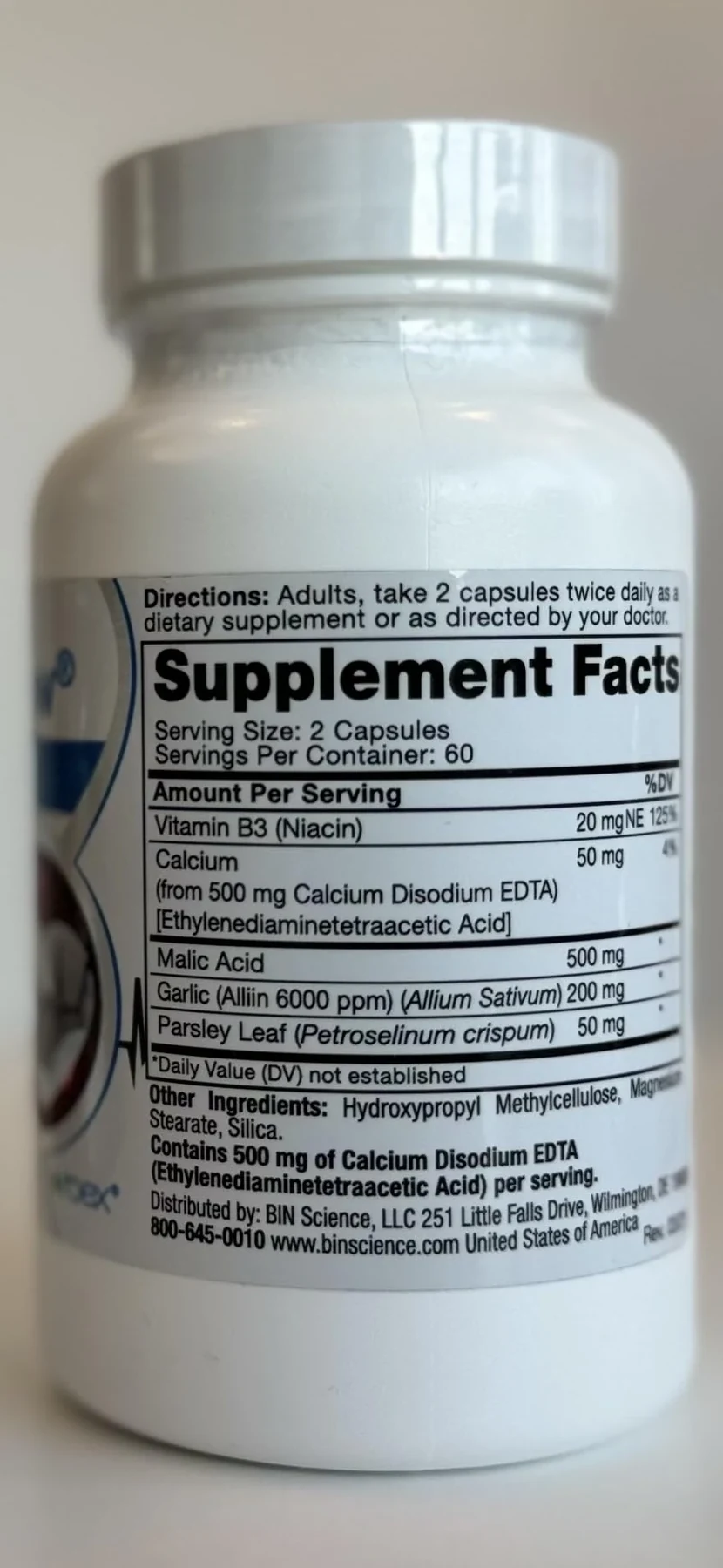
Here is every active in Cardio Flow with its amount per 2-capsule serving, transcribed directly from the Supplement Facts panel.
| Ingredient | Amount per serving | %DV |
|---|---|---|
| Vitamin B3 (Niacin) | 20 mg NE | 125% |
| Calcium (from Calcium Disodium EDTA) | 50 mg | 4% |
| Malic Acid | 500 mg | † |
| Garlic (Alliin 6000 ppm) (Allium sativum) | 200 mg | † |
| Parsley Leaf (Petroselinum crispum) | 50 mg | † |
| Calcium Disodium EDTA | 500 mg | † |
† Daily Value not established. Other ingredients: hydroxypropyl methylcellulose (vegetarian capsule), magnesium stearate and silica.
The whole formula in one capsule
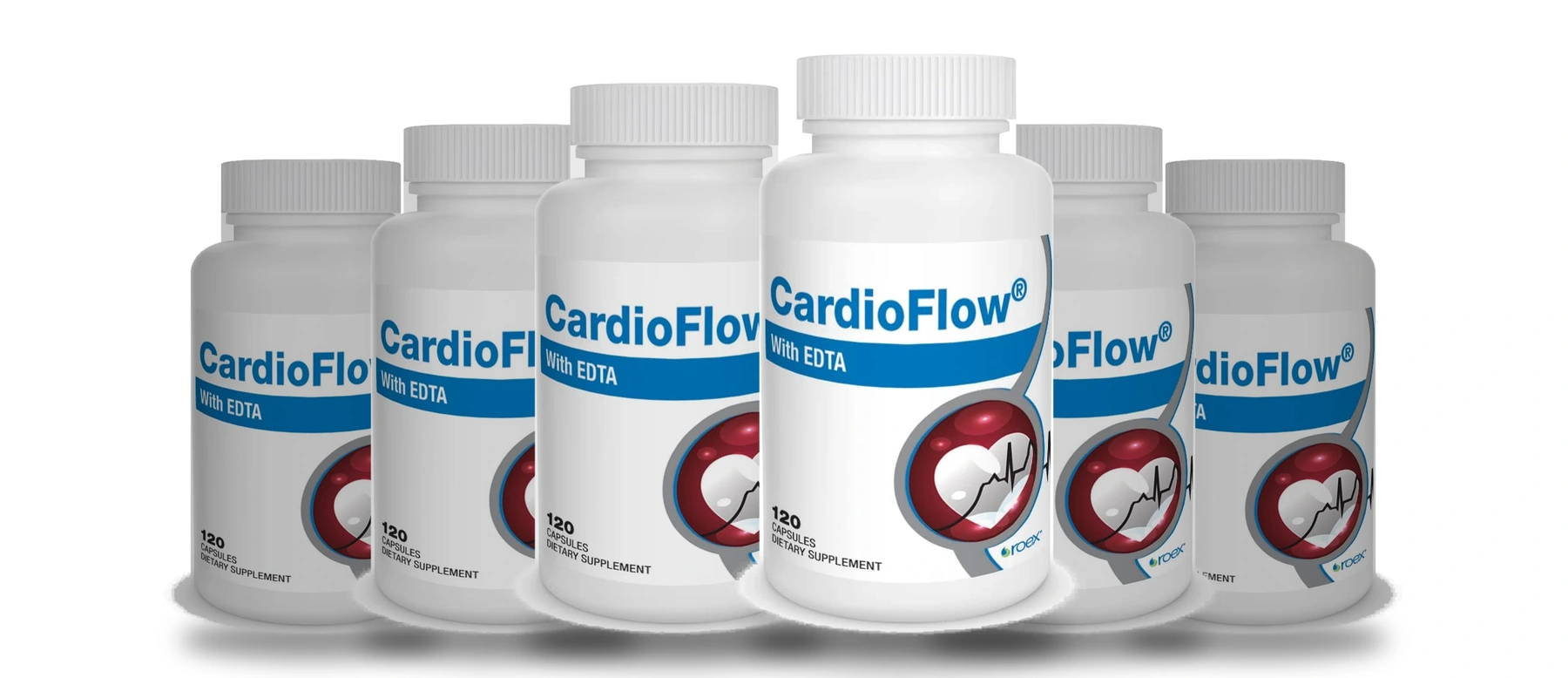
Cardio Flow brings EDTA, garlic, malic acid, niacin and parsley into one twice-daily capsule. The six-bottle bundle is the best value at $49 per bottle, with free U.S. shipping and a 60-day guarantee.
Order Cardio Flow — from $49/bottleHow do niacin and parsley fit in?
The formula is rounded out by two more familiar names. Vitamin B3 (niacin) is an essential vitamin that contributes to normal energy-yielding metabolism and the normal function of the body; Cardio Flow provides 20 mg NE, or 125% of the Daily Value, as the NIH Office of Dietary Supplements fact sheet sets out. That nutritional amount should not be confused with pharmacological niacin: the HPS2-THRIVE trial in The New England Journal of Medicine, 2014, gave more than 25,000 high-risk patients roughly two grams a day of extended-release nicotinic acid, found no reduction in major vascular events and recorded a significant excess of serious adverse effects. Parsley leaf (Petroselinum crispum) is a familiar culinary herb and a traditional source of naturally occurring plant compounds, included at 50 mg per serving. Bahramsoltani and colleagues, reviewing parsley in the Journal of Agricultural and Food Chemistry in 2024, catalogue its chemistry and traditional uses in detail while noting that most of the pharmacology remains laboratory and animal work — and 50 mg is a culinary-scale amount, roughly a garnish.
How to read any supplement label
Whether you choose Cardio Flow or something else, the same checklist helps you compare products fairly:
- Amount per serving — look for real numbers next to each active, not just a name.
- Serving size & servings per container — so you can work out cost per day and how long a bottle lasts.
- Standardisation — markers like garlic’s alliin content show a consistent dose batch to batch.
- Quality markers — GMP manufacturing, made in the USA, non-GMO and clear allergen statements.
- Directions & warnings — a trustworthy label tells you how to take it and who should not.
Cardio Flow lists all of the above: 500 mg EDTA, 500 mg malic acid, 200 mg garlic, 50 mg parsley and 20 mg NE niacin per 2-capsule serving, 60 servings per 120-capsule bottle, made in an FDA-registered, GMP-compliant facility. See it all in the Supplement Facts section.
Who should be cautious?
Cardio Flow is a dietary supplement to be taken as directed — two capsules twice daily. It is not for use by pregnant or lactating women, or by children. People with kidney disorders, or those taking prescription blood thinners, should not use this product unless directed to do so by their physician. If you take any medication or have a medical condition, speak with your doctor before starting. These simple cautions come straight from the product’s own label.
Frequently asked questions
What is EDTA in a supplement?
EDTA (ethylenediaminetetraacetic acid) is a chelating compound that binds minerals. It has been used for decades in oral cardiovascular-wellness formulas. In Cardio Flow it is supplied as 500 mg of calcium disodium EDTA per serving. It is a dietary-supplement ingredient, not a treatment for any disease.
Is garlic good for circulation?
Garlic has been used across cultures for centuries and is one of the most researched culinary herbs for everyday circulatory wellness. Cardio Flow supplies 200 mg of garlic per serving with a standardised alliin content.
What does malic acid do?
Malic acid is a naturally occurring fruit acid found in apples and other produce. It plays a role in the body’s natural energy cycle and is a common supporting ingredient in supplements. Cardio Flow includes 500 mg per serving.
How much EDTA is in Cardio Flow?
Each 2-capsule serving of Cardio Flow contains 500 mg of Calcium Disodium EDTA, which also contributes 50 mg of calcium. Adults take 2 capsules twice daily, or as directed by a doctor.
Is oral EDTA safe?
Cardio Flow is a dietary supplement to be taken as directed. It is not for pregnant or lactating women or children, and people with kidney disorders or taking prescription blood thinners should not use it unless directed by their physician. Speak with your doctor if you take medication or have a medical condition.
What should I check on the label?
Look for the amount of each active per serving, the serving size and servings per container, quality markers such as GMP manufacturing, and clear directions and warnings. Cardio Flow lists all of these on its Supplement Facts panel.
Try Cardio Flow risk-free for 60 days →
Cardio Flow is a dietary supplement, not a treatment for any medical condition. These statements have not been evaluated by the Food and Drug Administration. This product is not intended to diagnose, treat, cure or prevent any disease. Always consult a qualified healthcare professional about your individual needs.
References & further reading
- National Center for Complementary and Integrative Health (NCCIH). Chelation. nccih.nih.gov/health/chelation-therapy
- National Center for Complementary and Integrative Health (NCCIH). Garlic. nccih.nih.gov/health/garlic
- PubChem, U.S. National Library of Medicine. Malic Acid — compound summary. pubchem.ncbi.nlm.nih.gov/compound/Malic-acid
- National Institutes of Health, Office of Dietary Supplements. Niacin — Fact Sheet for Health Professionals. ods.od.nih.gov/factsheets/Niacin-HealthProfessional
- Bahramsoltani R, et al. Petroselinum crispum (Mill.) Fuss (Parsley): An Updated Review of the Traditional Uses, Phytochemistry, and Pharmacology. Journal of Agricultural and Food Chemistry, 2024. PMID 38189231
- Lamas GA, et al. Effect of disodium EDTA chelation regimen on cardiovascular events in patients with previous myocardial infarction: the TACT randomized trial. JAMA, 2013. PMID 23532240
- Lamas GA, et al. Edetate Disodium-Based Chelation for Patients With a Previous Myocardial Infarction and Diabetes: TACT2 Randomized Clinical Trial. JAMA, 2024. PMID 39141382
- Ried K. Garlic Lowers Blood Pressure in Hypertensive Individuals, Regulates Serum Cholesterol, and Stimulates Immunity: An Updated Meta-analysis and Review. The Journal of Nutrition, 2016. PMID 26764326
- HPS2-THRIVE Collaborative Group. Effects of extended-release niacin with laropiprant in high-risk patients. The New England Journal of Medicine, 2014. PMID 25014686
These references describe the ingredients in general terms and do not constitute evidence that Cardio Flow treats, cures or prevents any condition.
Keep reading: how to support healthy circulation naturally · the best foods for heart health · back to the Cardio Flow blog · homepage.