Best foods for heart health: a complete list from Cardio Flow
The best foods for heart health are not exotic or expensive — they are the whole, colourful, minimally processed foods that support healthy circulation and cardiovascular wellness. This complete list walks through them group by group, with a nutrient table and a sample balanced day, so you can build a heart-friendly plate without overthinking it. Cardio Flow is designed to sit alongside this kind of eating, not replace it.
The heart-healthy plate, in one place.
- The pattern
- Build most meals around vegetables, fruit, whole grains, beans, nuts, olive oil and fish — a Mediterranean-style, plant-forward plate.
- Star foods
- Oily fish, leafy greens, beets, berries, oats, beans, walnuts, olive oil, and alliums such as garlic and onions.
- Limit
- Ultra-processed foods, added sugar, refined grains, excess sodium and heavily processed meats; keep alcohol modest.
- Simple rule
- Fill half your plate with vegetables and fruit, a quarter with whole grains, a quarter with lean protein.
- Where supplements fit
- A formula like Cardio Flow can complement good eating, but food comes first and supplements are not a treatment.
Decades of nutrition research point in the same friendly direction: eating patterns built around whole plants, healthy fats and fish are associated with better cardiovascular wellness. The clearest single piece of evidence is the PREDIMED trial, reported by Estruch and colleagues in The New England Journal of Medicine, 2018, which randomly assigned nearly 7,500 adults at high cardiovascular risk to a Mediterranean diet supplemented with extra-virgin olive oil or with nuts and recorded fewer major cardiovascular events over roughly five years than in the control group. You do not need a rigid diet or a long list of rules — just a bias toward real food and a little variety. Below is the complete group-by-group list, followed by a nutrient table and a sample day you can copy. For the habits that surround food, see our guide to supporting healthy circulation naturally.
Which food groups matter most?
1. Oily fish and omega-3 sources
Fatty fish such as salmon, sardines, mackerel and trout are the headline source of long-chain omega-3 fats, which are a well-studied part of a heart-healthy diet. Aim for two servings a week; if you do not eat fish, ground flaxseed, chia and walnuts provide plant omega-3s. It is worth separating fish from fish-oil capsules: reviewing the randomised evidence in Cardiovascular Research in 2023, Bassuk and colleagues describe the benefit of marine omega-3 supplements as modest and dose-dependent, which is a good reason to reach for the salmon before the softgel.
2. Leafy greens and nitrate-rich vegetables
Spinach, kale, rocket, chard and beetroot are natural sources of dietary nitrates, which the body uses in the everyday chemistry of blood-vessel function. Greens also deliver fibre, potassium and a wealth of plant compounds for very few calories.
3. Berries and colourful fruit
Blueberries, strawberries, blackberries and other deeply coloured fruits are rich in polyphenol antioxidants. Whole fruit brings its sugar wrapped in fibre, which is why a bowl of berries behaves very differently from a glass of juice.
4. Whole, intact grains
Oats, barley, quinoa, brown rice and whole-grain bread supply soluble fibre and steady energy. Oats and barley in particular are classic heart-healthy staples thanks to their beta-glucan fibre. The size of that effect is unusually well quantified: in a series of systematic reviews and meta-analyses commissioned by the World Health Organization and published in The Lancet in 2019, Reynolds and colleagues found the lowest rates of coronary heart disease among people eating roughly 25 to 29 grams of dietary fibre a day, with the trend continuing above that.
5. Beans, lentils and legumes
Chickpeas, black beans, lentils and split peas pack fibre and plant protein into one inexpensive package, making them one of the easiest upgrades to any plate.
6. Nuts, seeds and olive oil
A small daily handful of walnuts, almonds or mixed seeds, and a generous drizzle of extra-virgin olive oil, supply the unsaturated fats at the heart of a Mediterranean-style pattern.
7. Alliums: garlic and onions
Garlic and onions do double duty — they make vegetables taste better and they carry a long culinary and traditional history in circulatory wellness. Garlic is also one of the actives in Cardio Flow, at 200 mg per serving. In a meta-analysis of controlled trials published in The Journal of Nutrition in 2016, Ried pooled garlic-preparation trials in people with elevated blood pressure and reported an average systolic reduction of about eight millimetres of mercury — using aged garlic extract at daily doses well above the amount in a capsule, which is why this is context rather than a claim.
Add Cardio Flow to a heart-healthy routine →
A heart-healthy nutrient table
Different foods bring different strengths. This table maps the star groups to the nutrients they are best known for and an easy way to use them.
| Food group | Known for | Easy way to use it |
|---|---|---|
| Oily fish | Omega-3 fats | Two servings a week; tinned sardines on toast count. |
| Leafy greens & beets | Fibre, potassium, nitrates | A big handful in a salad, stir-fry or smoothie daily. |
| Berries | Polyphenols, fibre | A bowl with breakfast or as a naturally sweet snack. |
| Oats & barley | Beta-glucan fibre | Porridge, overnight oats, or barley in soups. |
| Beans & lentils | Fibre, plant protein | Add a tin to salads, soups and pasta sauces. |
| Nuts & olive oil | Unsaturated fats | A daily handful of nuts; cook and dress with olive oil. |
| Garlic & onions | Plant compounds, flavour | The base of almost any savoury dish. |
Round out your plate
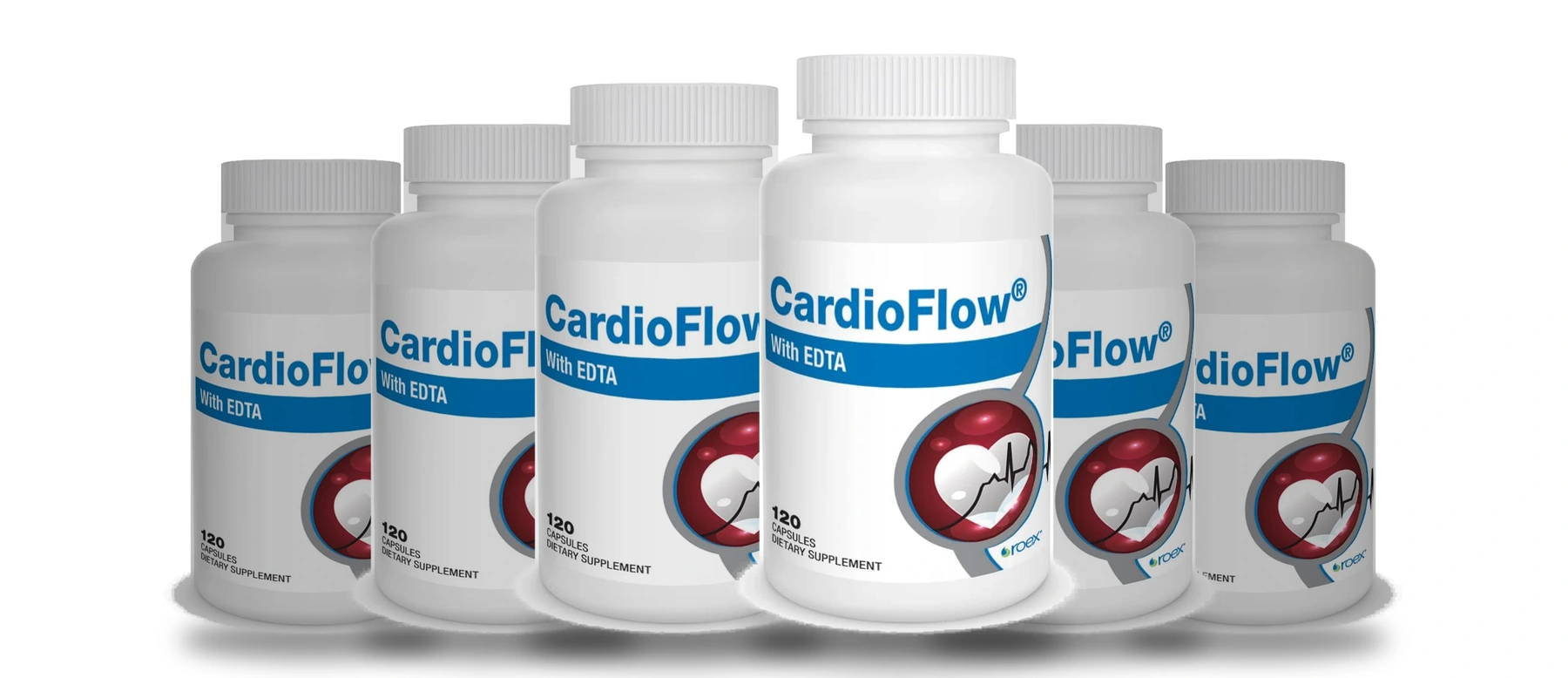
Cardio Flow pairs 500 mg of EDTA with garlic, parsley, malic acid and niacin in a twice-daily capsule. The six-bottle bundle is the best value at $49 per bottle, with free U.S. shipping and a 60-day guarantee.
Order Cardio Flow — from $49/bottleWhat does a heart-healthy day look like?
Templates beat rules. Here is one simple day that hits every group above without any special shopping.
| Meal | Example | Heart-healthy groups |
|---|---|---|
| Breakfast | Porridge oats with blueberries and walnuts | Whole grains, berries, nuts |
| Lunch | Big salad with chickpeas, greens, olive oil and tinned salmon | Beans, greens, olive oil, fish |
| Snack | An apple and a small handful of almonds | Fruit, nuts |
| Dinner | Stir-fried vegetables with garlic, brown rice and tofu or fish | Alliums, vegetables, whole grains, protein |
| Drinks | Water and unsweetened tea through the day | Hydration, polyphenols |
Which foods are worth limiting?
You do not have to ban anything, but a heart-healthy pattern naturally crowds out a few things: ultra-processed snacks, sugary drinks, refined white grains, very salty foods and heavily processed meats. Salt is the one worth taking seriously: in a trial of nearly 21,000 villagers in rural China published in The New England Journal of Medicine in 2021, Neal and colleagues found fewer strokes and fewer major cardiovascular events among households switched to a potassium-enriched salt substitute. Keep alcohol modest. The aim is a plate that is mostly whole foods most of the time — the occasional treat does not undo a good week.
Where do supplements fit?
Food always comes first. That said, some people like to complement a balanced diet with a targeted supplement. Cardio Flow is one such option: a twice-daily capsule that brings together 500 mg of Calcium Disodium EDTA with garlic, parsley, malic acid and niacin. It is a support to good eating and activity, not a substitute, and it is not intended to diagnose, treat, cure or prevent any disease. To understand the actives, read EDTA, garlic and malic acid for circulation.
Frequently asked questions
What are the best foods for heart health?
Oily fish, leafy greens, beets, berries and other colourful produce, whole intact grains, beans and lentils, nuts and seeds, olive oil, and alliums such as garlic and onions. A varied, whole-food, plant-forward plate is the foundation.
Is garlic good for the heart?
Garlic has been used across cultures for centuries and is among the most researched culinary herbs for everyday circulatory wellness. It is a flavourful, whole-food addition to a heart-healthy plate rather than a treatment for any condition.
Which foods should I limit for heart health?
It helps to limit ultra-processed foods, added sugars, refined grains, excess sodium and heavily processed meats, and to keep alcohol modest. The goal is a pattern built mostly around whole foods, not perfection.
Do I need supplements if I eat well?
Food comes first. Some people choose a supplement such as Cardio Flow to complement a balanced diet, but it is a support to good eating and activity, not a replacement, and it is not a treatment for any disease.
What does a heart-healthy day look like?
A simple template: oats with berries and nuts at breakfast; a big salad with beans, olive oil and fish at lunch; vegetables, whole grains and a lean protein at dinner; and fruit, yoghurt or a handful of nuts for snacks.
Is coffee or tea bad for the heart?
For most people, moderate unsweetened coffee and tea fit comfortably in a heart-healthy pattern, and tea is a natural source of polyphenols. Watch the added sugar and syrups rather than the drink itself.
Try Cardio Flow risk-free for 60 days →
Cardio Flow is a dietary supplement, not a treatment for any medical condition. These statements have not been evaluated by the Food and Drug Administration. This product is not intended to diagnose, treat, cure or prevent any disease. Always consult a qualified healthcare professional about your individual needs.
References & further reading
- National Heart, Lung, and Blood Institute (NHLBI). Heart-Healthy Eating. nhlbi.nih.gov/health/heart-healthy-living/healthy-foods
- National Center for Complementary and Integrative Health (NCCIH). Garlic. nccih.nih.gov/health/garlic
- National Institutes of Health, Office of Dietary Supplements. Omega-3 Fatty Acids. ods.od.nih.gov/factsheets/Omega3FattyAcids-HealthProfessional
- National Institutes of Health, Office of Dietary Supplements. Niacin — Fact Sheet for Health Professionals. ods.od.nih.gov/factsheets/Niacin-HealthProfessional
- Estruch R, et al. Primary Prevention of Cardiovascular Disease with a Mediterranean Diet Supplemented with Extra-Virgin Olive Oil or Nuts. The New England Journal of Medicine, 2018. PMID 29897866
- Reynolds A, et al. Carbohydrate quality and human health: a series of systematic reviews and meta-analyses. The Lancet, 2019. PMID 30638909
- Neal B, et al. Effect of Salt Substitution on Cardiovascular Events and Death. The New England Journal of Medicine, 2021. PMID 34459569
- Ried K. Garlic Lowers Blood Pressure in Hypertensive Individuals, Regulates Serum Cholesterol, and Stimulates Immunity: An Updated Meta-analysis and Review. The Journal of Nutrition, 2016. PMID 26764326
- Bassuk SS, Manson JE. Marine omega-3 fatty acid supplementation and prevention of cardiovascular disease: update on the randomized trial evidence. Cardiovascular Research, 2023. PMID 36378553
These references describe foods and ingredients in general terms and do not constitute evidence that any product treats, cures or prevents any condition.
Keep reading: how to support healthy circulation naturally · how EDTA, garlic and malic acid work · back to the Cardio Flow blog · homepage.