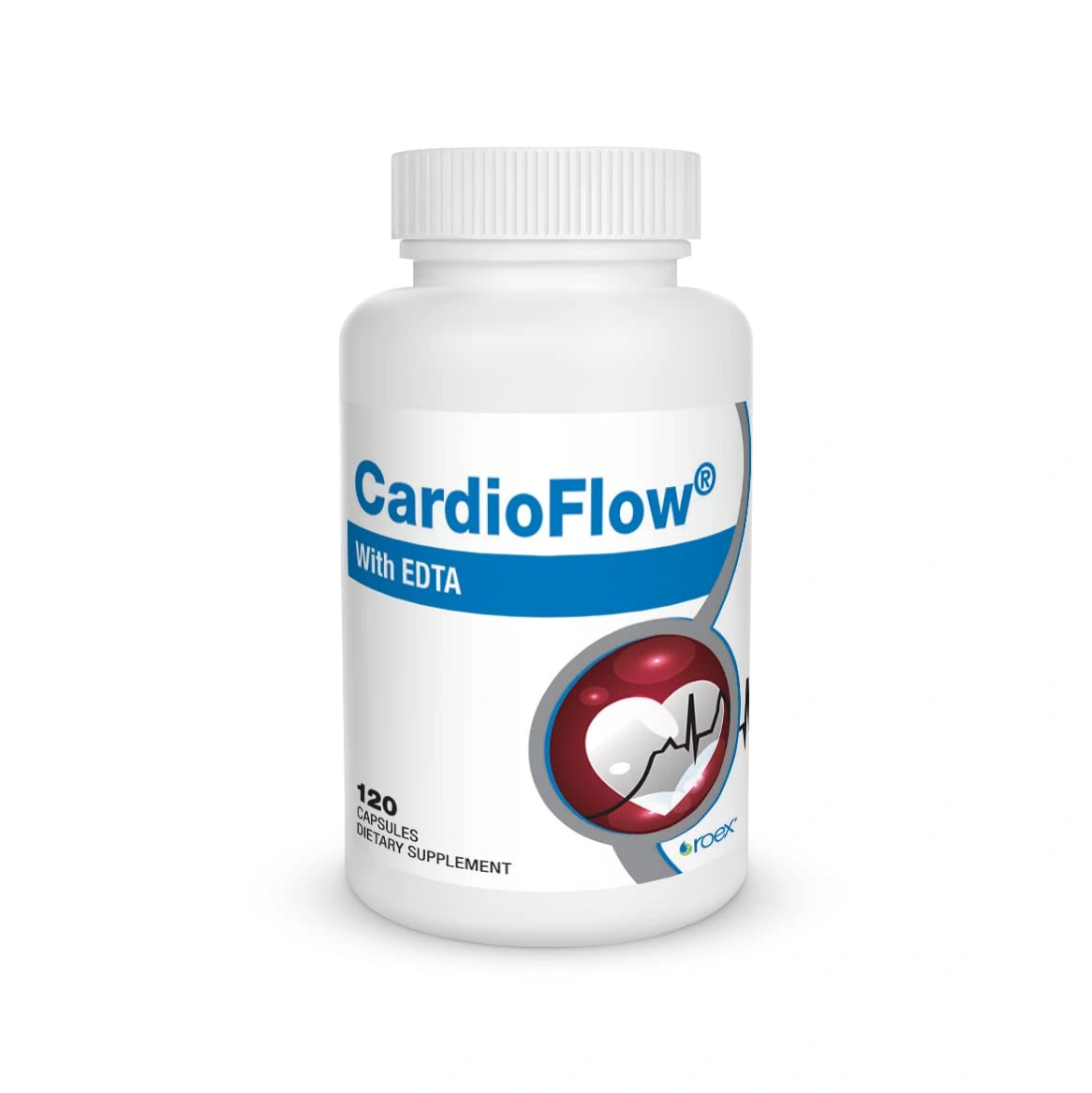
Cardio Flow™ is a heart-health dietary supplement that pairs 500 mg of Calcium Disodium EDTA with traditionally used cardiovascular botanicals — garlic and parsley — alongside malic acid and niacin, formulated to support healthy circulation and cardiovascular wellness as part of a balanced lifestyle.
Made in an FDA-registered facility · Non-GMO · 60-day money-back guarantee
Natural Ingredientsgarlic & parsley actives
Made in the USAquality-controlled facility
GMO-Freenon-GMO formula
GMP Facilityquality-controlled
The complete fast answer for readers, voice assistants and AI — every essential detail in one place, each written as a full, quotable sentence.

Cardio Flow is a doctor-formulated capsule produced in the United States in an FDA-registered facility that follows Good Manufacturing Practices (GMP). Every batch is made from non-GMO ingredients and is gluten-free, dairy-free and vegetarian — a clean base for the EDTA, garlic, malic acid, niacin and parsley on the label.
“FDA-registered facility” refers to where Cardio Flow is manufactured. Dietary supplements are not approved by the FDA, and these statements have not been evaluated by the Food and Drug Administration.
Every badge below reflects how and where Cardio Flow is made and formulated — not a health outcome.


Figures describe the product and its guarantee. They are not claims about results, which vary from person to person.


Built by a formulation team and produced under GMP quality control.

500 mg EDTA with garlic, parsley, malic acid and niacin.

No wheat or gluten — friendly for most everyday diets.

Contains no dairy, so it fits a wide range of lifestyles.

A vegetarian capsule suited to plant-forward routines.

Backed by a 60-day money-back guarantee — try it risk-free.
Your heart pushes blood through tens of thousands of miles of vessels every single day, yet circulation is one of the last things most of us think about. Refined food, long hours at a desk, rising stress and the simple passage of time all nudge cardiovascular wellness in the wrong direction. For most people the goal is not a dramatic intervention — it is simply steadier, everyday support.
Cardiovascular wellness is the product of many small habits: what you eat, how you move, how you sleep. Nutrition can play a supporting role. Certain minerals, amino acids and traditionally used botanicals have long been part of that conversation — garlic, prized for centuries in circulatory wellness, and EDTA, a compound with a long history in oral cardiovascular formulas.
Cardio Flow was built around that idea: a focused daily capsule that brings those well-known nutrients together, then gets out of the way of your routine.
What follows is a plain-language look at what Cardio Flow is, how its formula is intended to work, exactly what is inside each serving, and the research those ingredients draw on — transcribed directly from the product’s Supplement Facts panel, with no claims to diagnose, treat, cure or prevent any disease.

Cardio Flow is a twice-daily capsule dietary supplement for everyday cardiovascular support. Rather than a drink or powder, it comes as convenient capsules: you take two, twice a day, with water — no mixing, no measuring, no routine to overthink.
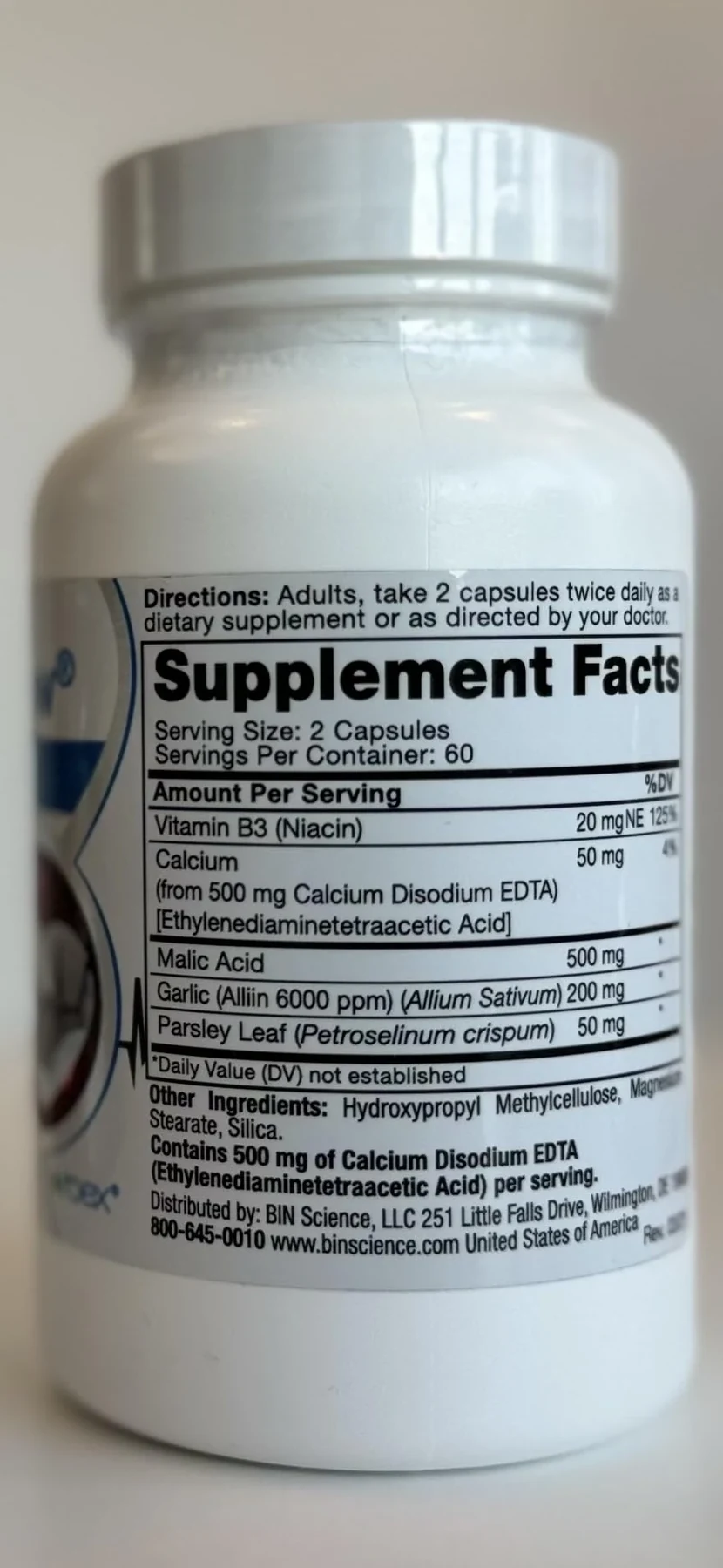
Inside each 2-capsule serving is 500 mg of Calcium Disodium EDTA together with malic acid, garlic, parsley leaf and vitamin B3 (niacin) — a cardio-focused combination of a well-known chelating compound, a traditional circulatory botanical and supporting nutrients.

Cardio Flow is designed for adults who want a simple, consistent way to support healthy circulation as part of everyday life — meals, errands, daily walks and routine check-ups. It is a complement to a balanced diet and regular activity, not a replacement for either.
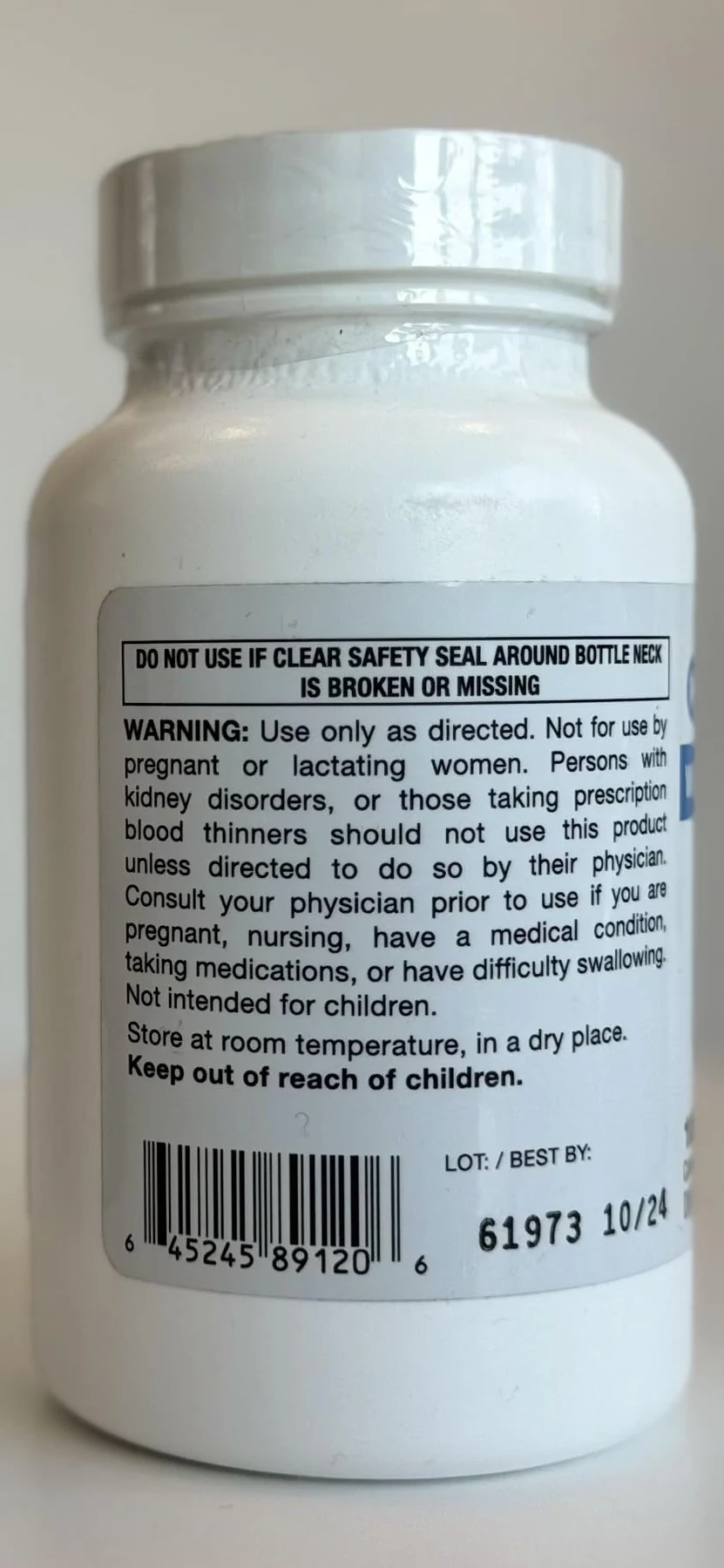
Not for children, or for those who are pregnant or nursing. People with kidney disorders or taking prescription blood thinners should not use this product unless directed by their physician.
Cardio Flow is designed to support the body’s own everyday circulation — not to override it. Here is the thinking behind the formula.

The formula leans on nutrients with long histories of dietary and traditional use: EDTA, a compound used in oral cardiovascular formulas for decades; garlic, prized across cultures for circulatory wellness; and supporting malic acid, niacin and parsley. Delivered as capsules, they are simple to take and simple to keep up with day after day.
Calcium Disodium EDTA is the headline compound on the label at 500 mg per serving; garlic, parsley, malic acid and niacin round out the cardio-focused blend.
Each serving supplies 500 mg of Calcium Disodium EDTA, a well-known compound with a long history of use in oral cardiovascular-wellness supplements.
Garlic and parsley layer in plants long used in circulatory wellness traditions, each contributing its own profile of naturally occurring compounds.
A capsule is simple to take and simple to remember. Consistency matters most, and a twice-daily capsule makes daily use effortless.
These statements describe the general and traditional roles of the ingredients and are not intended to diagnose, treat, cure or prevent any disease.
Transcribed directly from the Supplement Facts panel. Each ingredient below links to an independent, authoritative reference so you can read the science yourself.
The headline compound in Cardio Flow. EDTA (ethylenediaminetetraacetic acid) is a chelating agent: a molecule that binds metal ions and holds onto them. Here it is delivered as calcium disodium EDTA, the calcium-loaded salt, which is why the panel also declares 50 mg of calcium per serving. The calcium form is used in food and supplements precisely because it is already saturated with a mineral the body has plenty of, so it is far less likely than the sodium form to strip calcium out of the bloodstream.
Two points of honesty belong beside this ingredient. First, the large randomized trials of EDTA in heart patients — TACT in 2013 and TACT2 in 2024 — infused disodium EDTA intravenously over dozens of sessions; they did not test an oral capsule, and TACT2 found no reduction in cardiovascular events. Second, oral EDTA is poorly absorbed, so a swallowed dose behaves very differently from an infused one. Cardio Flow uses EDTA as a traditional ingredient in an oral cardiovascular-wellness formula, not as a substitute for chelation therapy, which is a medical procedure.
One of the most storied botanicals in circulatory wellness, garlic has been used across cultures for centuries and is among the most researched herbs for everyday cardiovascular support. The label specifies alliin standardised to 6000 ppm, which tells you the powder is measured against its best-known sulphur compound rather than simply weighed.
Garlic is also the ingredient here with the most human data behind it: a 2016 meta-analysis in The Journal of Nutrition pooled trials in people with raised blood pressure and reported an average reduction in the region of eight points systolic. Read that number carefully. Those trials used aged garlic extract at daily doses several times the 200 mg in this serving, in people whose blood pressure was already high, and blood-pressure lowering is a medical outcome that no dietary supplement may claim.
A naturally occurring fruit acid found in apples and other produce, and the largest single ingredient in the formula alongside EDTA. Malic acid is an intermediate in the citric-acid cycle, the sequence of reactions every cell uses to release energy from food, and it is widely used in dietary supplements and foods as a supporting ingredient and acidity regulator.
It is also the ingredient with the least direct cardiovascular research behind it. There are no large human outcome trials of 500 mg of supplemental malic acid for circulation, and we are not going to pretend otherwise. In practice it functions here as a supporting acid alongside the calcium disodium EDTA rather than as a headline active.
A familiar culinary herb and a traditional source of naturally occurring plant compounds — apigenin, luteolin and vitamin K among them — parsley rounds out the botanical side of the blend. A 2024 review in the Journal of Agricultural and Food Chemistry catalogues its traditional uses and its chemistry in detail.
That same review is candid that most of the pharmacology is laboratory and animal work rather than human trials, and 50 mg is a culinary-scale amount — roughly what you would get from a garnish. Parsley is here for the completeness of the botanical profile, not as a heavyweight dose.
An essential B vitamin that contributes to normal energy-yielding metabolism and to the normal function of the nervous system and skin. Niacin is one of only two nutrients on this panel with an established Daily Value, and at 20 mg NE a serving supplies 125% of it.
It is worth separating this from the niacin you may have read about in cardiology. The trials that tested niacin for heart outcomes — HPS2-THRIVE, published in The New England Journal of Medicine in 2014 — used roughly two grams a day of extended-release nicotinic acid, found no reduction in vascular events and recorded a significant excess of adverse effects. Twenty milligrams of niacin equivalents is a nutritional amount, about what a good diet supplies, and it is not the same intervention.
Delivered as part of the calcium disodium EDTA on the label rather than added separately. Calcium is an essential mineral the body uses for bone, for muscle contraction — the heart muscle included — and for nerve signalling and normal blood clotting.
At 50 mg it is 4% of the Daily Value, which is a small contribution: a single glass of milk carries roughly six times as much. Its presence on the panel is a consequence of the chelate chosen, and it is the reason the formula uses the calcium salt of EDTA rather than the sodium one.
Other ingredients: Hydroxypropyl Methylcellulose (vegetarian capsule), Magnesium Stearate and Silica. See the complete Supplement Facts panel below.
Serving size: 2 capsules · 60 servings per container. Exactly what is in every serving — taken straight from the label.
| Amount per 2-capsule serving | %DV |
|---|---|
| Vitamin B3 (Niacin) | 20 mg NE · 125% |
| Calcium (from Calcium Disodium EDTA) | 50 mg · 4% |
| Malic Acid | 500 mg · † |
| Garlic (Alliin 6000 ppm) (Allium sativum) | 200 mg · † |
| Parsley Leaf (Petroselinum crispum) | 50 mg · † |
| Calcium Disodium EDTA | 500 mg · † |
Other ingredients: Hydroxypropyl Methylcellulose, Magnesium Stearate, Silica. Contains 500 mg of Calcium Disodium EDTA (Ethylenediaminetetraacetic Acid) per serving. † Daily Value not established.
Suggested use: Adults, take 2 capsules twice daily as a dietary supplement, or as directed by your doctor.

Statements describe the general and traditional roles of the ingredients and have not been evaluated by the Food and Drug Administration.
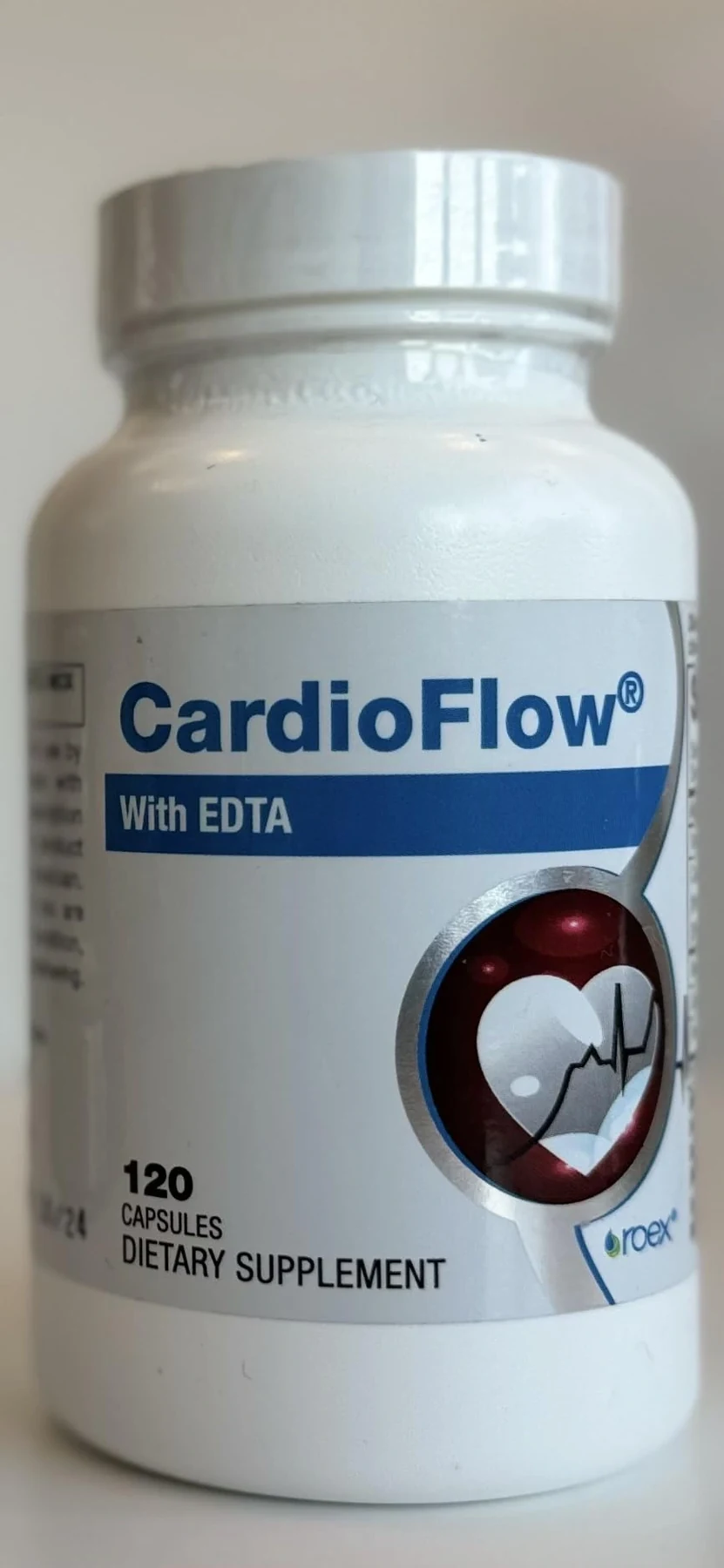
Cardio Flow is a capsule, and only a capsule. It is sold in a 120-capsule bottle holding sixty two-capsule servings, and the Supplement Facts panel names hydroxypropyl methylcellulose as the shell material — a plant-derived cellulose rather than gelatin, which is why the product is described as vegetarian. There is no Cardio Flow gummy, no liquid drop, no powder, no tincture and no chewable tablet. If you find a listing offering one, it is not this product.
That is worth saying plainly, because heart and circulation supplements are sold in every one of those formats and search results mix them freely. The choice of a capsule here is not arbitrary. Two of the actives on this label are half-gram doses: 500 mg of Calcium Disodium EDTA and 500 mg of malic acid. Add garlic, parsley and niacin and a single serving carries well over a gram of active material. A gummy can rarely hold a gram of anything without becoming mostly sugar and gelling agent, which is why gummy versions of heavy-dose formulas almost always drop the dose rather than the sweetener.
A capsule also protects the taste. Garlic and EDTA are both distinctly unpleasant to swallow in solution, and a liquid drop would need flavour masking that a sealed capsule simply avoids. The trade-off is that you swallow four capsules across a day rather than chew two sweets, and for people who dislike swallowing capsules that is a real drawback worth knowing before you order.

Two capsules, twice a day, is the whole routine. There is nothing to mix and nothing to measure — just take your capsules with water.
Adults take two capsules twice daily — four capsules across the day — as a dietary supplement, or as directed by your doctor.
Swallow with a glass of water, with or without food, at whatever times of day you’ll remember.
Use it every day alongside a balanced diet and active routine so the formula can support your circulation over time.
Do not exceed the recommended dose. Store at room temperature in a dry place. Keep out of the reach of children.
Order the 3- or 6-bottle package and get these companion e-guides free — delivered as instant digital downloads to help you get the most from a heart-healthy routine.
A simple guide to the everyday foods and swaps that support circulation and cardiovascular wellness.
Gentle, practical movement ideas — from daily walks to easy strength work — you can build into any week.
Get the most from Cardio Flow with a short guide to fitting the twice-daily capsule into your day.
Bonuses are digital downloads. Availability may vary by package and while supplies last; see the official store for current offers.
Every order is a one-time payment — no subscription — protected by our 60-day money-back guarantee. The more you bundle, the more you save.
One-time payment · 60-day guarantee
One-time payment · 60-day guarantee · free bonuses
🔒 Secure encrypted checkout · one-time payment · no subscription
Cardio Flow is priced per bottle, and the per-bottle price falls as the package grows: a single bottle is $79 plus a small shipping fee, the three-bottle package works out at $59 per bottle, and the six-bottle package is the lowest at $49 per bottle. The three- and six-bottle packages ship free within the United States. Those are the only three figures on the pricing table above, and they are the figures this page is built around.
Because one bottle is 120 capsules and the labelled dose is four capsules a day, a bottle is a month at the recommended intake. That makes the arithmetic of the bundles unusually simple: the six-bottle package is priced as six months of daily use, not as a stockpile you will never finish. It is also why the middle option exists at all — three months is long enough to judge a supportive routine without committing to half a year.
Two cautions about price. First, supplement stores run promotions, and the figures on the official checkout are the ones that bind; treat any price quoted on a third-party page, including this one, as a snapshot rather than a contract. Second, a lower headline price on a marketplace listing is not automatically a better deal, because it usually travels without the guarantee.
Cardio Flow is sold through its official online store, and every Order button on this page leads there. This guide does not link to Amazon, Walmart, eBay or any other marketplace listing, and that is a deliberate editorial choice rather than an oversight. Supplement listings on open marketplaces are frequently placed by resellers outside the brand supply chain, where storage conditions, expiry dates and batch provenance are nobody in particular’s responsibility.
It matters commercially as well. The 60-day money-back guarantee is offered by the seller on orders placed through the official store; a refund request on a third-party purchase goes to that third party under their policy, not this one. If the guarantee is part of why you are willing to try the product, buying anywhere else quietly removes the thing you were relying on.
We earn an affiliate commission if you buy through the links on this page, at no extra cost to you. That is disclosed in full in the footer, and it does not change the price you pay or the doses printed on the label.
Try Cardio Flow for a full two months. If you’re not completely delighted, contact us for a refund of your purchase price — no questions, no hassle. That’s how confident we are that you’ll want to make it part of your routine.
Cardio Flow has no published safety trial of its own, so the honest way to discuss side effects is ingredient by ingredient, using what is documented about each active at or above the dose on this label. Nothing below is a prediction about you, and none of it replaces a conversation with your own doctor.
Garlic is the ingredient most likely to be noticed. Breath and body odour are the common complaints, followed by heartburn, gas and general digestive upset, and these are reported more often when garlic is taken on an empty stomach. The more important issue is bleeding: garlic can affect platelet behaviour, and the National Center for Complementary and Integrative Health advises caution alongside anticoagulant medicines and before surgery. That is the reason the Cardio Flow label itself warns against use with prescription blood thinners.
Niacin is famous for flushing — the hot, red, prickling sensation across the face and chest. That effect belongs overwhelmingly to nicotinic acid at the several-hundred-milligram to multi-gram doses used in cardiology, not to the 20 mg NE on this panel, which is a nutritional amount comparable to a well-fed day. Flushing at this dose would be unusual, but people vary and it is not impossible.
Calcium Disodium EDTA is a chelator, which means it binds minerals. In food and oral supplements it is used at doses of this order and is poorly absorbed, which limits its systemic reach; the serious adverse events historically associated with EDTA come from intravenous chelation, and specifically from confusing disodium EDTA with the calcium form. The kidney is the organ that clears EDTA, which is why the label instructs people with kidney disorders not to use the product without a physician’s direction.
Parsley at 50 mg is a culinary quantity. Its one relevant note is vitamin K, which is why anyone whose warfarin dose is balanced against a steady vitamin K intake should mention any new parsley-containing supplement to their prescriber.
Do not exceed the recommended dose. Stop taking Cardio Flow and speak to a healthcare professional if you experience anything unexpected. These statements have not been evaluated by the Food and Drug Administration, and this product is not intended to diagnose, treat, cure or prevent any disease.
No published clinical trial has tested the finished Cardio Flow formula, so there is no measured timeline for the product and anyone quoting one is guessing. What can be said honestly is how long the research on the individual ingredients ran, and what a sensible personal trial looks like.
The garlic studies pooled in the 2016 meta-analysis in The Journal of Nutrition typically ran eight to twelve weeks before measuring anything, which is the shortest window over which a botanical taken daily has produced a measurable average change in that literature. Niacin and calcium behave as nutrients: if your intake was low, repletion is a matter of weeks; if it was already adequate, adding more changes very little. Nothing in this formula is designed to produce a sensation you would notice on day one, and a supplement that did would be a different kind of product entirely.
A reasonable approach is to take Cardio Flow at the labelled dose every day for a full bottle, then a second, and decide at that point whether it has earned a place in your routine. Sixty days is also the length of the money-back guarantee, which makes an eight-week trial the natural unit: long enough to be a fair test, short enough to still ask for a refund if it is not for you.
Two things will do more for the timeline than the capsule will. The first is consistency — four capsules a day, every day, beats a heavier dose taken sporadically. The second is everything around it: what is on your plate, how much you move, how you sleep. A supplement supports a routine; it does not replace one, and it does not treat, cure or prevent any disease.
Two capsules with breakfast and two with dinner — it’s genuinely simple. I like that it’s a straightforward capsule and not another drink to make.
I keep the bottle by the kettle so I never forget. It’s become an effortless part of my morning and evening.
Ordered the six-bottle pack so I wouldn’t run out, and the guarantee made trying it an easy decision.
Read the comments above for what they are. Every one of them is about routine — a capsule that is easy to remember, a bottle kept by the kettle, a bundle bought so the routine does not lapse. Not one of them reports a measured outcome, because a customer cannot measure one, and a supplement testimonial that claims to is a testimonial worth distrusting.
You will notice this page carries no star rating and no average score. That is deliberate. We have not audited a representative sample of Cardio Flow buyers, and a rating assembled from a handful of quotes chosen by the people selling the product is a number with no information in it. Where a genuine average exists, it comes from a verified-purchase system that counts every buyer, not from a curated wall.
If you want a fair picture before ordering, the useful questions are the checkable ones: does the label print its doses, is the purchase one-time, is there a refund window, and does the research support the ingredient at the dose actually used. Those are answered on this page. The rest is other people’s mornings.
Testimonials reflect individual experiences. Results vary and are not guaranteed. Cardio Flow is a dietary supplement, not a treatment for any medical condition.
“Is it a scam” is really two questions wearing one coat: is the transaction dishonest, and is the marketing telling the truth about the evidence? They deserve separate answers, because for Cardio Flow they get different ones.
The label is transparent in the way that matters most: every active is named with its own dose, in milligrams, rather than buried in a proprietary blend that lets a formulator print an impressive ingredient list over trace amounts. Five hundred milligrams of Calcium Disodium EDTA is a real, stated, verifiable quantity. The purchase is one-time, with no subscription and no auto-billing — the pattern behind most genuine supplement complaints is a recurring charge nobody remembers agreeing to, and it is absent here. There is a 60-day money-back guarantee, and the manufacturing claims are the ordinary, checkable kind: made in the United States, in an FDA-registered facility following Good Manufacturing Practices.
The evidence is thinner than the marketing around products in this category usually implies, and that is true of this page’s own promotional language. No trial has tested this finished formula, so every reference on this site describes an individual ingredient rather than the product. “FDA-registered facility” means the plant told the FDA it exists; it is not an approval, an inspection result or an endorsement, and dietary supplements are not approved by the FDA at all. “Doctor-formulated” is a marketing description with no regulatory definition behind it. And the big randomized trials of EDTA in cardiac patients used intravenous infusions of a different EDTA salt, with TACT2 in 2024 finding no benefit — so they cannot be used to argue that an oral capsule works.
Customer quotes are not evidence either. The comments on this page describe convenience and habit, which is exactly what a testimonial is good for and exactly what it cannot substitute for.
Cardio Flow does not look like a fraud. It looks like a conventional, transparently dosed dietary supplement sold with the loud optimism that the whole category is sold with. If you buy it expecting a nutritional supplement that supports a routine you are already building — food, movement, sleep, and whatever your doctor has you doing — the product matches the description. If you buy it expecting it to treat a cardiovascular condition, no supplement can do that, and this one makes no such claim on its label.
Cardio Flow makes no medical claims. The sources below are independent, authoritative references on the individual ingredients for readers who want to go deeper.
The single most useful thing to know about the research below is that none of it studied Cardio Flow. Every citation on this page examines one ingredient, usually at a different dose and often in a different form, in people who are not necessarily you. That is the normal situation for a multi-ingredient dietary supplement, and it is worth stating clearly rather than blurring.
On EDTA. The two large randomized trials are TACT, published in JAMA in 2013, and TACT2, published in JAMA in 2024. TACT gave post-heart-attack patients forty intravenous infusions of disodium EDTA and reported a modest reduction in a composite endpoint that its own investigators called insufficient to support routine clinical use. TACT2 repeated the design in patients with diabetes and found no reduction in cardiovascular events. Both used intravenous infusions of a different salt from the calcium disodium EDTA in this capsule, and oral EDTA is poorly absorbed. The correct reading is that these trials say nothing in favour of an oral EDTA supplement — and that the more recent and larger of them is negative.
On garlic. This is the strongest ingredient in the formula by weight of human data. A 2016 meta-analysis in The Journal of Nutrition pooled controlled trials in people with elevated blood pressure and found an average systolic reduction of roughly eight millimetres of mercury. The qualifications matter: those trials mostly used aged garlic extract at daily doses several times the 200 mg here, they enrolled people whose blood pressure was already raised, and lowering blood pressure is a medical outcome that a dietary supplement is not permitted to claim.
On niacin. The nutrient science is settled and uncontroversial — niacin is essential, and 20 mg NE is 125% of the Daily Value. The cardiovascular story is different. HPS2-THRIVE, published in The New England Journal of Medicine in 2014, tested roughly two grams a day of extended-release nicotinic acid in more than 25,000 high-risk patients, found no reduction in major vascular events and recorded a significant excess of serious adverse effects. That trial is a reason not to take pharmacological niacin casually; it says nothing for or against the nutritional dose in this capsule.
On parsley and malic acid. The 2024 parsley review in the Journal of Agricultural and Food Chemistry is thorough on chemistry and traditional use, and thin on human trials, which is a fair description of the field. Malic acid has essentially no human cardiovascular outcome research at 500 mg, and we are not going to invent any.
On the lifestyle around it. The best-supported cardiovascular interventions are not in a bottle. The PREDIMED trial, published in The New England Journal of Medicine in 2018, found fewer major cardiovascular events in people assigned a Mediterranean diet supplemented with extra-virgin olive oil or nuts. The American Heart Association’s Life’s Essential 8 framework, published in Circulation in 2022, sets out the eight measures — diet, activity, nicotine exposure, sleep, weight, lipids, glucose and blood pressure — that actually move cardiovascular risk. A capsule sits alongside those; it does not stand in for them.
These references describe the ingredients in general terms and do not constitute evidence that Cardio Flow treats, cures or prevents any condition. Always speak with a qualified healthcare professional about your individual needs.
Cardio Flow pairs 500 mg of Calcium Disodium EDTA with traditionally used cardiovascular botanicals — garlic and parsley — plus malic acid and niacin, delivered in easy capsules. It is formulated to support healthy circulation and cardiovascular wellness as part of a balanced lifestyle, and it is not a treatment for any heart or circulatory condition.
Each 2-capsule serving supplies Vitamin B3 (Niacin) 20 mg NE, Calcium 50 mg from 500 mg Calcium Disodium EDTA, Malic Acid 500 mg, Garlic (Allium sativum, Alliin 6000 ppm) 200 mg and Parsley Leaf 50 mg. The other ingredients are hydroxypropyl methylcellulose, magnesium stearate and silica. There are 60 servings in every 120-capsule bottle.
Cardio Flow is a capsule and only a capsule. There is no Cardio Flow gummy, liquid drop, powder or chewable tablet, and any listing offering one is not selling this product. The shell is hydroxypropyl methylcellulose, a plant-derived cellulose rather than gelatin, which is why the label is described as vegetarian.
Adults take 2 capsules twice daily as a dietary supplement, or as directed by a doctor. That is four capsules across the day. Take them with water, with or without food, at whatever times of day you will actually remember, and do not exceed the recommended dose.
There is no published clinical trial on the finished Cardio Flow formula, so no honest timeline can be quoted for the product itself. The garlic trials pooled in the published meta-analyses generally ran 8 to 12 weeks, so most people give a supportive supplement at least that long before judging it. Individual results vary and are not guaranteed.
Reported effects of the individual ingredients are usually mild. Garlic can cause breath and body odour, heartburn and digestive upset in some people, and it may increase bleeding risk. Niacin can cause skin flushing, though far more often at the multi-hundred-milligram doses used in cardiology than at the 20 mg NE on this label. Stop taking it and speak to a doctor if anything feels wrong.
Cardio Flow is not for use by pregnant or lactating women or by children. Persons with kidney disorders, or those taking prescription blood thinners, should not use this product unless directed to do so by their physician. If you take medication or have a medical condition, consult your doctor before use.
Nothing on the label or the checkout looks fraudulent: the doses are printed rather than hidden in a proprietary blend, the purchase is one-time with no auto-billing, and the order is covered by a 60-day money-back guarantee. What the marketing overstates is the evidence, because no trial has tested this finished formula and an FDA-registered facility is a manufacturing registration, not an approval. Treat it as a supplement, not as a treatment.
Cardio Flow is sold through its official online store, which every Order button on this page leads to. This guide deliberately does not link to marketplace listings, because third-party sellers are outside the official supply chain and the 60-day money-back guarantee applies to orders placed through the official store.
Cardio Flow is priced per bottle: a single bottle is $79 plus a small shipping fee, the three-bottle package works out at $59 per bottle, and the six-bottle package is the lowest at $49 per bottle. The three- and six-bottle packages ship free within the United States. Check the official store for the current figures before you order.
Because a steady routine matters most, many people choose the 3- or 6-bottle package so they do not run out mid-routine. The 6-bottle option is the best value per bottle and ships free within the U.S. One bottle is 120 capsules, which is about one month at the labelled dose.
Yes. Every Cardio Flow order is a one-time purchase with no subscription, no auto-billing and no hidden charges of any kind.
Every order is protected by a 60-day money-back guarantee. If you are not completely happy for any reason, contact the team within 60 days for a full refund of your purchase price.
The customer comments published on this page describe convenience and routine — an easy twice-daily capsule, no drink to mix — rather than measured health outcomes. This guide does not publish a star score or an average rating, because we have not audited a representative sample of buyers and a number invented from a handful of quotes would tell you nothing.
Join the people who’ve made Cardio Flow their twice-a-day habit for everyday circulation support. A simple capsule, protected by a 60-day money-back guarantee — and the six-bottle bundle is the best value, with free U.S. shipping.
Order Cardio Flow Now